
ATTENTION: Business owners
Insights for Business Owners
Like You
Practical tips, strategies, and insights to help you protect your business, grow with confidence, market smarter, and succeed long-term.
Staying ahead in business isn’t easy. That’s why we share practical tips, proven strategies, and fresh perspectives in our blog. From tax-saving ideas and business growth strategies to insurance planning and marketing hacks, you’ll find content that speaks directly to your needs as a business owner.
Examples of Blog Topics:
How to Cut Your Tax Bill Without Cutting Corners
5 Proven Ways to Increase Cash Flow This Quarter
The Insurance Every Business Owner Should Have (But Most Don’t)
How to Attract More Clients Without Spending a Fortune on Ads

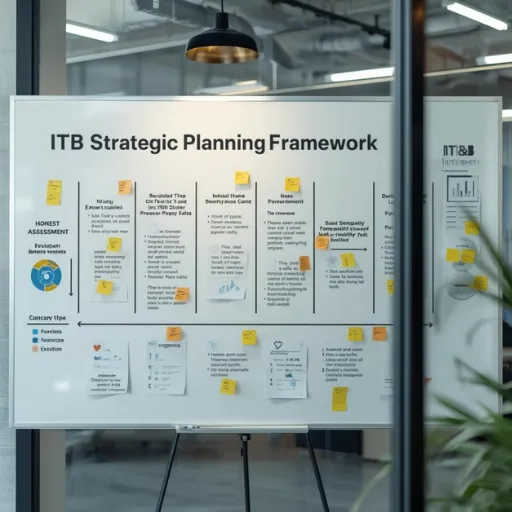
January 2026: Strategic Planning for 2026: A Framework for Business Owners Who Want Results, Not Just Resolutions
Another year, another round of business goals that will be forgotten by March. Sound familiar?
Every January, business owners sit down with good intentions, set aggressive revenue targets, and promise "this will be the year." But by Q1 close, reality sets in. The goals were aspirational, execution was missing, and daily firefighting took over.
The problem isn't your goals—it's your approach to strategic planning.
After two decades working with owner-led businesses, I've watched this cycle repeat. The companies that break free don't work harder or set different goals. They fundamentally change how they approach strategic planning and execution.
THE DIFFERENCE BETWEEN GOALS AND STRATEGY
A goal is a desired outcome: "Grow revenue 20%" or "Open second location."
A strategy is a comprehensive plan: market positioning, resource allocation, competitive advantages, operational changes, and tactical execution required to achieve that outcome.
Most set goals and call it strategic planning. Then wonder why nothing changes.
Real strategic planning looks like this:
❌ Bad: "Increase revenue by $500K."
✅ Good: "Expand into healthcare practice management by developing specialized packages, hiring healthcare-focused consultants, creating targeted content, and establishing partnerships with three medical associations. Target: 8 new healthcare clients at $62K average."
See the difference? One is a wish. The other is a roadmap.
THE ITB STRATEGIC PLANNING FRAMEWORK
Five phases turn strategic planning from an annual exercise into a continuous competitive advantage:
PHASE 1: HONEST ASSESSMENT
Most want to jump straight to planning the future. That's a mistake.
You can't chart a course without understanding exactly where you are. This requires brutal honesty about financial performance, operational efficiency, market position, talent and culture, and customer concentration.
This phase should be uncomfortable. If it's not, you're not being honest enough.
PHASE 2: STRATEGIC PRIORITIZATION
Here's where most plans fail: trying to do everything.
The companies that execute well choose 3-5 strategic objectives for the year. That's it.
Use these filters: Impact, Feasibility, Risk, Timing, Dependencies.
Example: A $3M firm wanted to expand geographically, add three service lines, implement CRM, hire five people, and increase marketing 200%.
After proper prioritization, we focused on two objectives: professionalize sales/marketing for predictable revenue and develop next-gen leadership to reduce owner dependency.
Result: 18 months later, they built a sales system generating qualified leads weekly, promoted two managers to VP, increased business value 40%—because they focused instead of fragmenting.
PHASE 3: 90-DAY EXECUTION PLANNING
Annual plans are too abstract. Monthly too granular. Quarterly is the sweet spot.
For each objective, create 90-day action plans with specific deliverables, named owners, dependencies, resource requirements, success metrics, and review cadence.
PHASE 4: DISCIPLINED IMPLEMENTATION
Where most plans die—not creation, but execution.
Three things separate businesses that execute from those that don't: accountability structures, protected time, and visible tracking.
PHASE 5: ADAPTIVE REVIEW
Strategic plans shouldn't be static. Markets change. Opportunities emerge.
Build in formal review points: monthly (90-day goals on track?), quarterly (adjust objectives?), semi-annually (solving right problems?), annually (comprehensive refresh).
YOUR 2026 ACTION ITEMS
1. Block two full days for strategic planning (off-site, no interruptions)
2. Gather financial data, customer analysis, operational bottlenecks, competitive landscape
3. Complete honest assessment
4. Identify 3-5 strategic objectives
5. Build 90-day action plans
6. Establish weekly/monthly/quarterly review rhythm
7. Communicate to organization
8. Begin execution immediately
Strategic planning isn't about beautiful PowerPoints. It's about tough choices, deliberate resource allocation, and disciplined execution.
2026 can be different—but only if you change your approach.
---
Sean Alexander, Ph.D. | ITB Advisory Group | itbadvisory.com

Want to work with us?
You're facing complex business challenges that demand expert guidance.
At ITB Advisory Group, we understand your unique situation and deliver tailored solutions that actually work.
Our experienced team partners with you to identify opportunities, optimize performance,
and drive measurable growth.
Let's transform your challenges into competitive advantages together.

COMPANY
CUSTOMER CARE
LEGAL
FOLLOW US


Copyright 2026. Sean Alexander PA. All Rights Reserved.